In over ten thousand hours of fitting and wardrobe design I have taken apart a great many expensive jackets, and the thing that still surprises clients is how little the price told them. I have opened up garments from houses whose names carry real weight and found construction that would embarrass a much cheaper coat. I have also opened up unfashionable jackets from decades ago and found work I could not improve on.
So when someone asks whether something is a good suit, I do not look at the label. I look at four or five places, and it takes about a minute.
The chest: canvas or glue
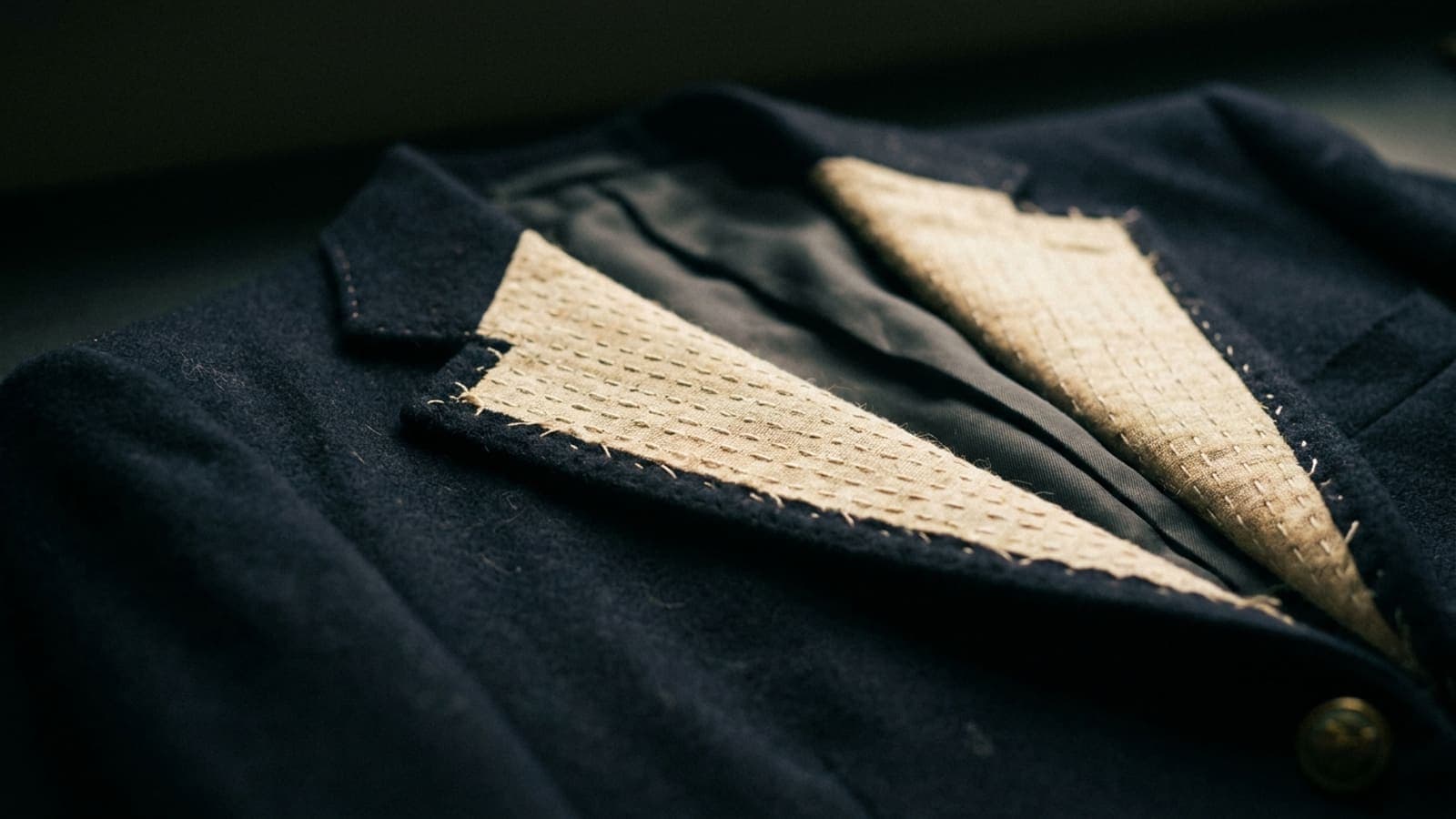
The single most consequential thing inside a jacket is the layer between the outer cloth and the lining, and it comes in two forms. A canvas — traditionally horsehair and wool — is stitched in and floats semi-attached, so it can move independently of the cloth. Or the cloth is fused: bonded to an interfacing with adhesive.
The difference is not snobbery. A floating canvas gradually moulds to the wearer, so a good jacket becomes more yours the longer you own it. A fused chest is fixed on the day it was made and can only get worse — and after enough dry-cleaning cycles the bond can fail and bubble. That rippled, blistered look across the chest of an otherwise fine jacket is glue letting go, and it is not repairable.
You can check it yourself. Take the front of the jacket between thumb and forefinger, just below and inward of the buttonhole, and roll the two layers gently against each other. If you can feel a distinct third layer shifting between the cloth and the lining, there is canvas in there. If the whole thing moves as one stiff board, it is fused.
A canvassed jacket becomes more yours every year you wear it. A fused one is as good as it will ever be on the day you buy it.
The shoulder, and how the sleeve was set
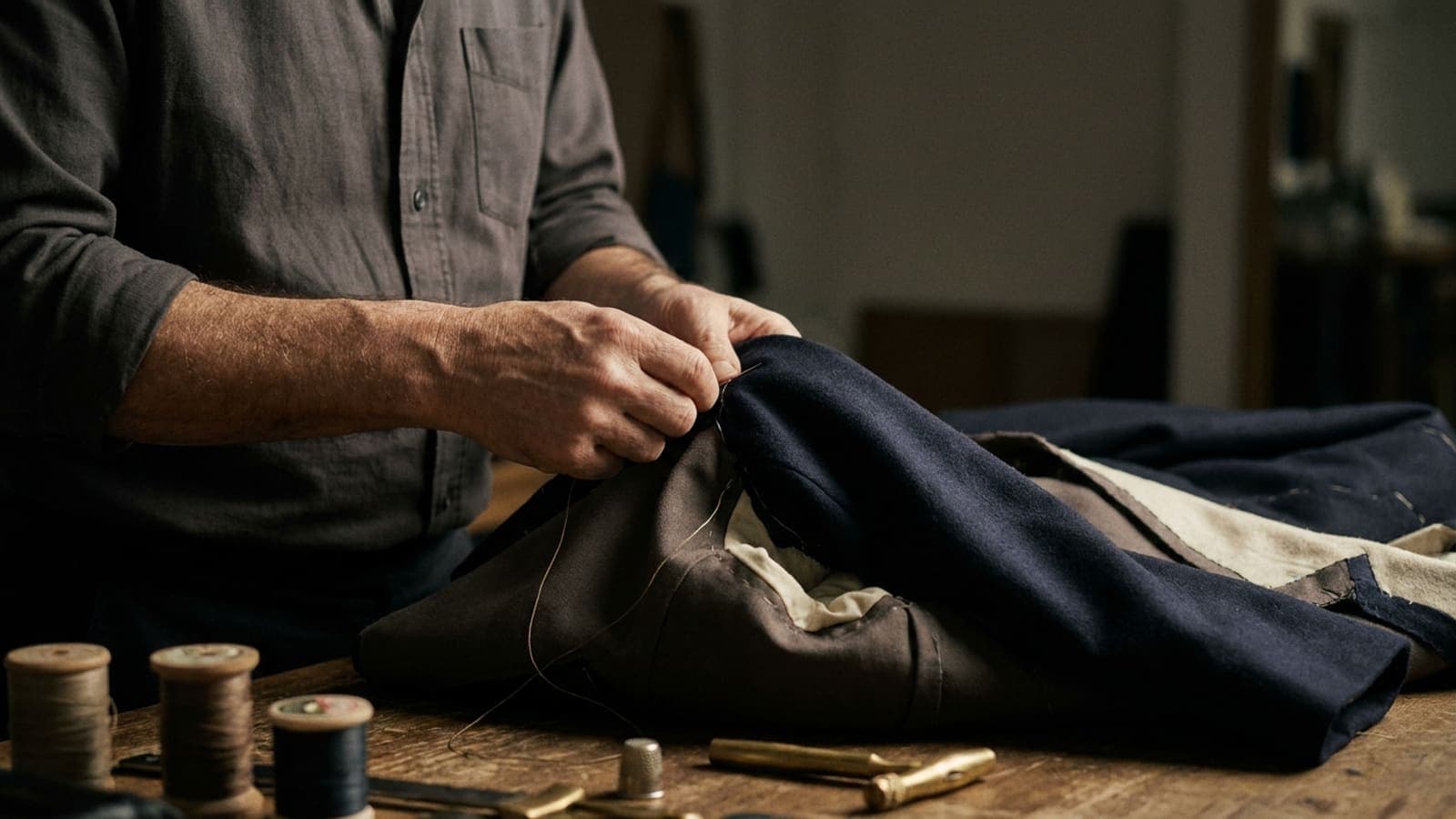
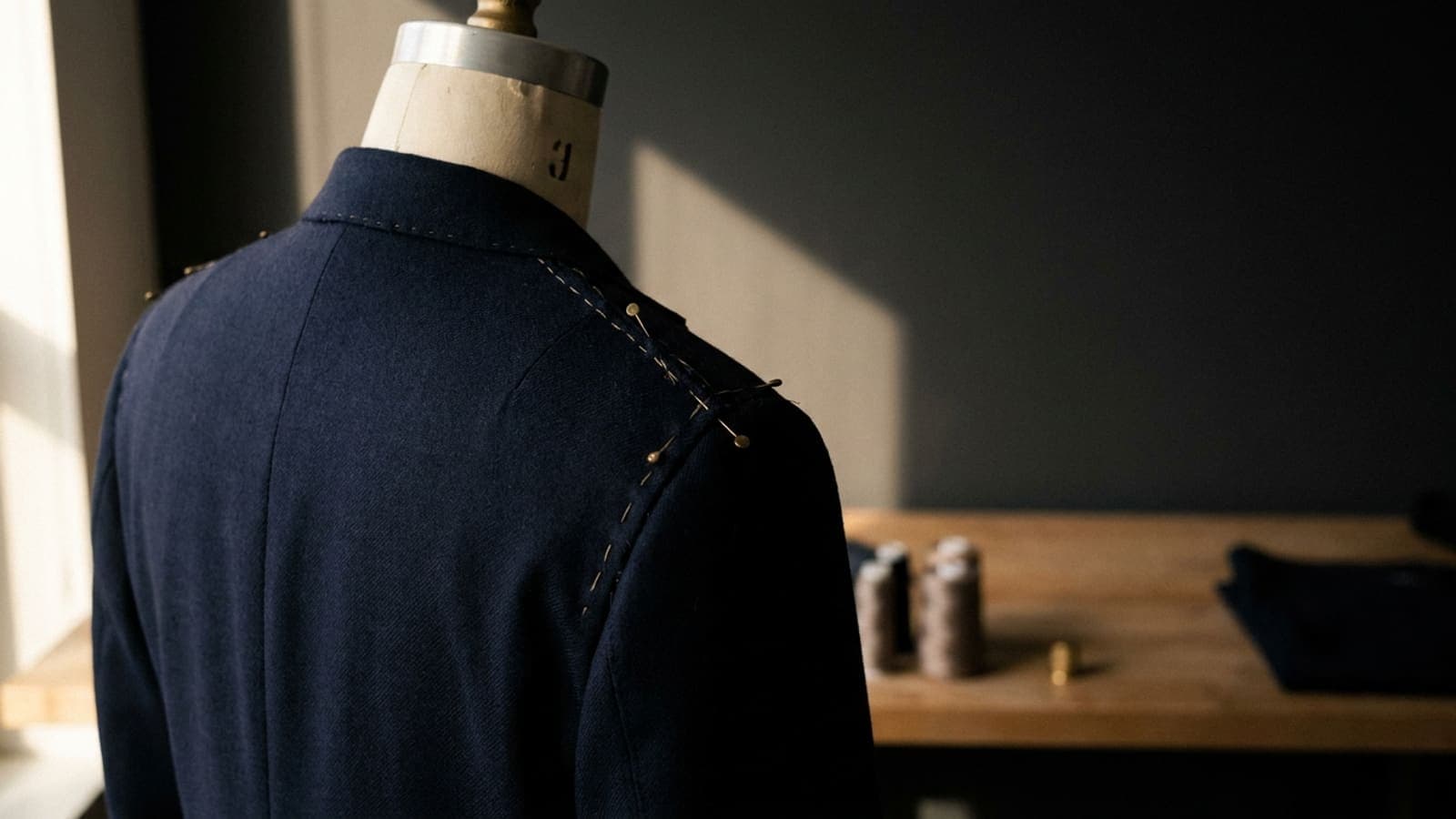
The join between sleeve and body is the hardest seam in tailoring, because the sleeve head has more fabric in it than the hole it must fit into. That surplus has to be eased in and distributed. Done by machine it goes in fast and evenly, and it tends to look flat and slightly mechanical. Done by hand, the ease can be placed where it is actually wanted and withheld where it is not, which is what produces a shoulder line that looks alive.
It is also why hand-finished sleeves hang correctly on asymmetrical shoulders — and every pair of shoulders is asymmetrical. Most people carry one lower than the other, usually on the dominant side. A machine does not know that. A person standing behind you at a mirror does.
The buttonholes tell on everything
Look at the lapel buttonhole and the cuff buttonholes. A hand-worked buttonhole has a slight irregularity to it and a raised, ropey edge from the gimp thread it is worked over. It looks like it was made rather than punched. A machine buttonhole is perfectly uniform and sits flat.
Then check whether the cuff buttonholes actually open. Functioning cuffs are a small tell about how the garment was planned, because a maker who intends to finish real buttonholes has to commit to sleeve length earlier — the order of operations is different. It is a detail nobody sees, and it correlates with a great deal that they do.
The rest of the inspection:
- Pattern matching across the seams — at the back seam, at the pockets, over the shoulder. Matching a check across a curved seam wastes cloth, which is exactly why it indicates care
- Pick stitching along the lapel edge and pocket openings: fine, faintly uneven stitches rather than a machined track
- The collar under the lapel — is it a separate piece of felt, hand-sewn on, or the same cloth folded over and machined
- Inlay in the seams. Turn the trousers inside out at the waist. Generous seam allowance means the garment was built to be let out later; a bare half-inch means it was built to be replaced
What none of this measures
Everything above is about how a garment was made. It says nothing at all about whether it fits you, and fit is the larger half of the question. A masterfully constructed jacket in the wrong size is a worse garment than an honest fused one that sits correctly on your shoulders, and I would tell any client the same.
This is the practical use of knowing what to look for: it tells you which garments in your closet are worth spending money on. A canvassed jacket with generous inlay from a good house is worth altering properly and will repay it for years. A fused jacket cut two sizes wrong is worth letting go of, and no amount of skilled work will change that. Most wardrobes contain a mix, and most people have it exactly backwards — clinging to the expensive mistake and neglecting the quiet thing that could be made excellent.
That sorting is the whole point of a wardrobe audit, and it is the most useful hour and three-quarters a lot of my clients spend. What stays. What is worth correcting. What has been taking up space for years.
If you would like a second opinion on something you already own, bring it in. I will tell you honestly whether it is worth the work — including when the answer is no.