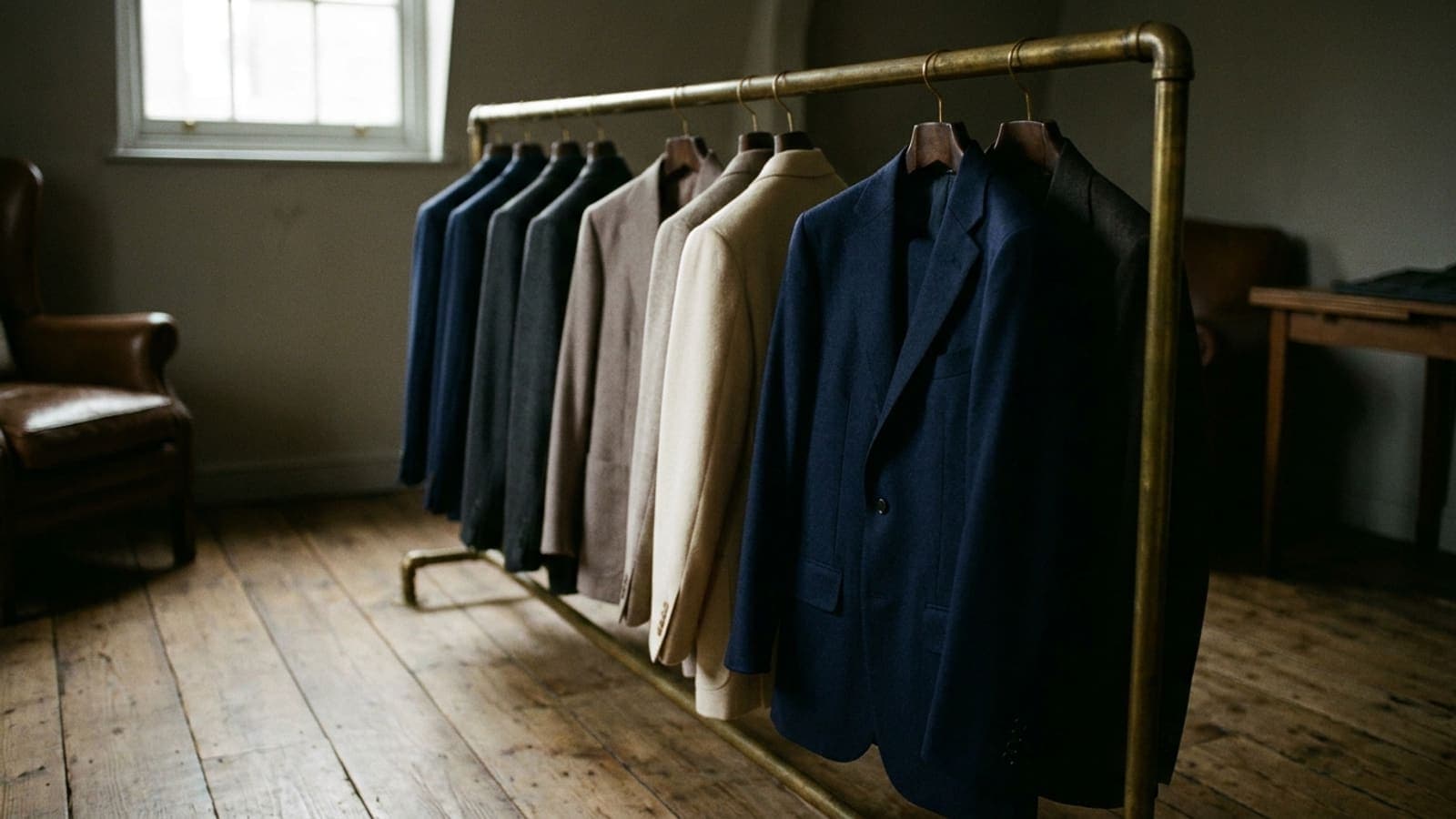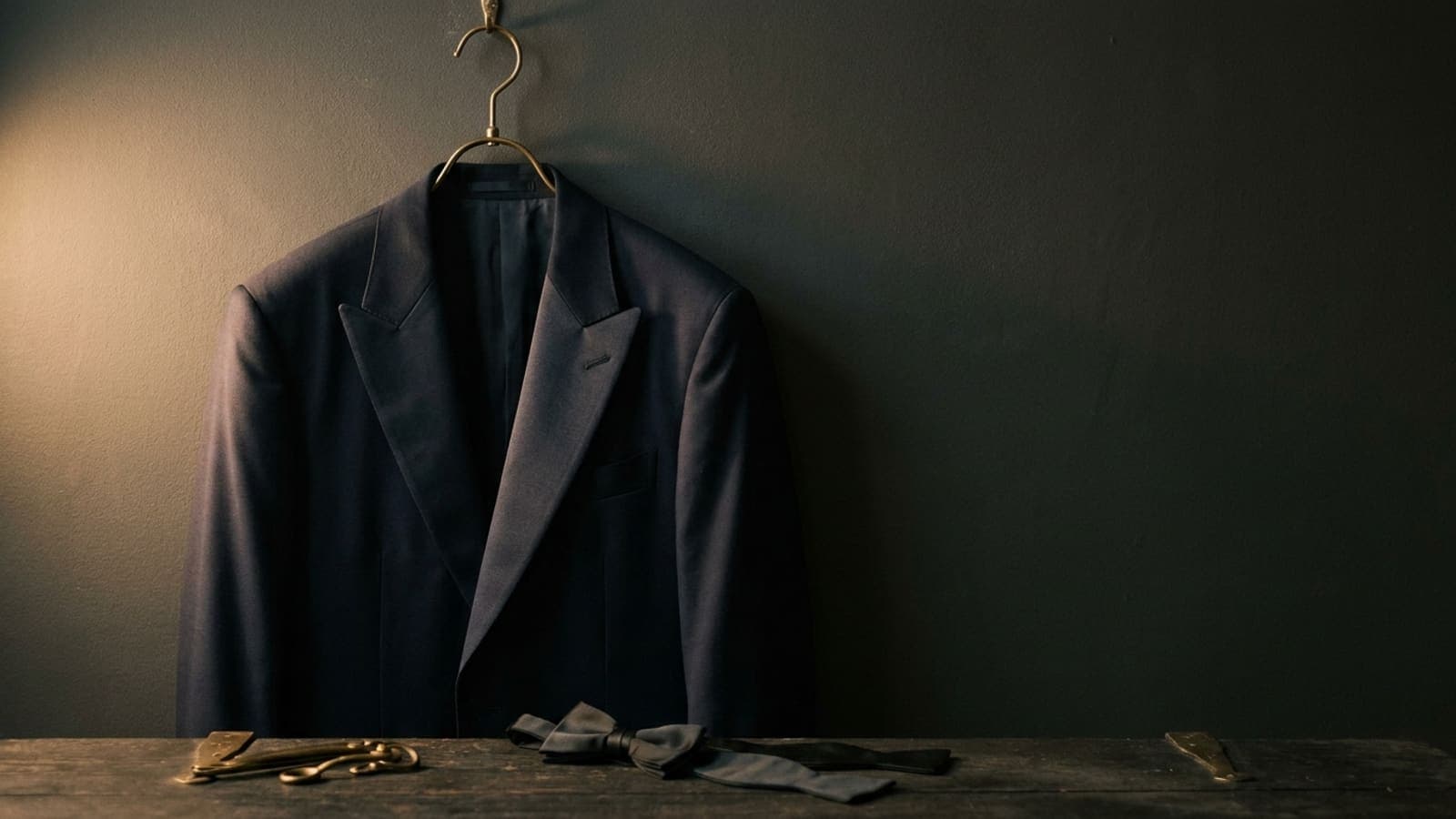
Most people come to me three or four weeks before something important. A wedding. A daughter’s wedding. A gala where the photographs will outlive everyone in them. And almost every one of them opens with the same sentence: I need something that looks expensive.
I understand what they mean, but it is the wrong target. Expensive is not a look. Expensive is a receipt. What they are actually reaching for is the thing that happens when a garment fits — when the shoulder sits where the shoulder is, when the collar stays against the neck as a man turns his head, when a jacket closes without pulling and opens without gaping. That reads across a room, and it reads in a photograph twenty years later. Nobody in the room can name it. Everybody in the room can see it.
What the occasion is actually asking of you
An occasion narrows the question. On an ordinary Tuesday, clothing has to survive a commute, a desk and a long afternoon. On the day itself it has one job: to hold up under attention. You will be looked at deliberately, for hours, by people who came specifically to look. You will also be photographed more in one evening than in the previous year.
That changes what matters. Comfort stops being a luxury and becomes structural — you cannot carry yourself well in something that is fighting you at the armhole. Movement matters more than stillness, because you will be embracing people, sitting down at a long table, standing back up, lifting a glass, lifting a child. A garment that photographs beautifully standing still and binds the moment you raise an arm has failed the only test that counts.
A suit that only works when you are standing still is not a suit. It is a costume with good manners.
Fit outranks formality, every time
There is a great deal of anxiety about rules — whether black tie means a bow tie, whether a waistcoat is required, whether brown shoes are permissible before dark. Those questions have answers, and I am happy to give them. But they are far less consequential than people think, because a poorly fitting dinner jacket is more conspicuously wrong than a well-fitting one that has taken a small liberty.
The hierarchy, in my experience, runs like this. Fit first — everything else is decoration applied on top of it. Cloth second, because the way a fabric falls and catches light does more work in a photograph than any detail you could add. Then colour, which should agree with the room and the season rather than announce itself. Then the details: the lapel, the buttonhole, the lining nobody sees but you.
If you are working backwards from a date, this is the order I would spend on:
- Fit through the shoulder and chest — the one thing that cannot be faked and cannot be fixed later
- Cloth appropriate to the season and to the hour of the event
- Trouser length and break, which is where most otherwise-good tailoring falls apart
- Shirt collar and cuff, because they frame the face and the hands
- Everything else
Why bespoke changes the day
The word is older than the marketing that has been done to it. Bespoke originated on Savile Row in London and means to be spoken for — a garment claimed by one person before it exists. It begins as a paper pattern drafted for one body and no other, rather than a stock block adjusted at the edges. That distinction sounds academic until you have stood in both.
Here, a commission runs through three fittings after the initial appointment. A scrap fitting proves the paper pattern in inexpensive fabric before your cloth is ever cut — so the mistakes happen on material nobody paid for. A basted fitting arrives loosely stitched in white basting thread, deliberately provisional, so balance and drape and shoulder can still be moved. A forward fitting is the last appointment before delivery, and by then we are refining rather than solving.
Three fittings is not ceremony. It is the number of chances it takes to get a shoulder right on a real body — which is asymmetrical, which stands differently at the end of the day than at the beginning, and which is nothing like the mannequin that ready-to-wear was drafted against.
The party has to agree with itself
Occasion dressing is rarely a solo problem. A wedding is six or eight people who need to read as one considered picture without looking like a uniform, standing next to a gown that is the centre of the frame and should stay that way.
We tailor bridal gowns, and we make and alter suiting for the groom and groomsmen. We no longer alter bridesmaids’ dresses — that is a real limit, and I would rather state it plainly here than have someone discover it in a fitting room in May. The gown consultation runs a full hour, because a dress is never a twenty-minute conversation.
What I ask parties to decide early is the through-line: one cloth family, one level of formality, one shoe. Then let the individual garments differ where they should. A best man built like a rower and a father of the bride who is not do not need identical jackets. They need jackets that agree.
Start earlier than feels necessary
The single most useful thing I can tell you is unglamorous: come in before you think you need to. A bespoke commission appointment runs forty-five minutes and takes a $75 bespoke deposit, and in that time we talk about how you actually live and work, choose cloth, and take the measurements the pattern is drafted from. Everything after that has a rhythm to it, and the rhythm is much kinder when nobody is counting days.
If a commission is not the right answer — and sometimes it is not — a garment you already own can often be brought properly to your body instead. We take fifteen percent off tailoring for new high-end designer suiting, and we work on Brioni, Canali, Tom Ford, Kiton, Isaia, Zegna, Armani and Hugo Boss, along with jackets that have been in the family longer than their owners. The goal is the same either way. On the day, you should not be thinking about your clothes at all.